
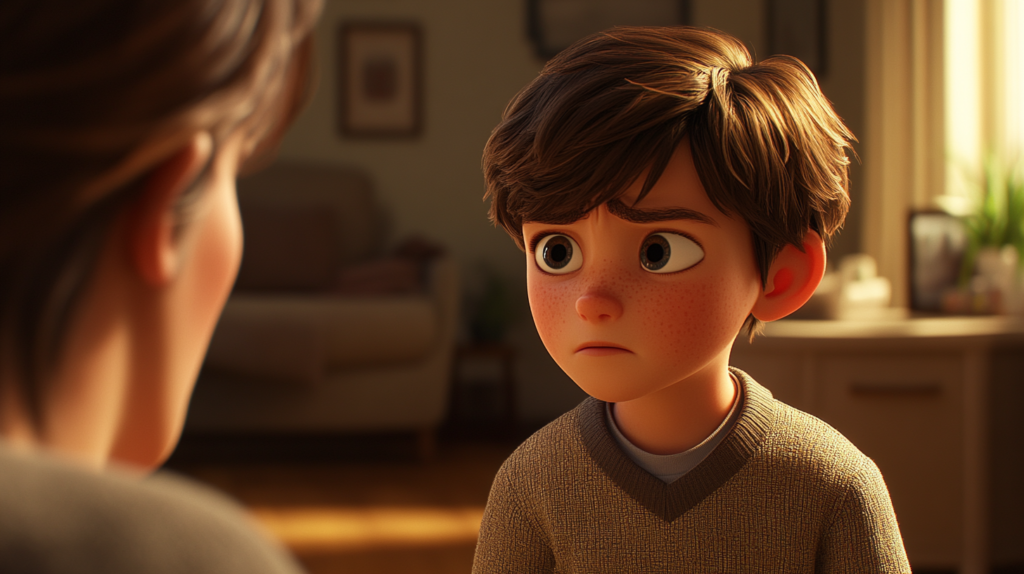
What to Do When Your Child Says “You Don’t Understand Me”
At this age, children start experiencing things more deeply than they can explain. When they say, “You don’t understand me,” it’s often less about the situation and more about how alone they feel in that moment.
The instinct is to correct them:
“I do understand.”
But this usually creates more distance, not less.
What helps more is to step out of the need to prove understanding. Instead of answering, shift into listening without trying to fix or clarify right away. The goal is not to be right — it’s to make the child feel heard.
Often, children don’t want a solution. They want space to express something they are still figuring out themselves. If we move too quickly into explanations or advice, it interrupts that process.
It can also help to accept that you may not fully understand — and that’s okay. Saying something simple like:
“Maybe I don’t fully get it yet, but I want to.”
opens the door instead of closing it.
At this stage, children are building their own inner world. They compare, question, and interpret things in ways that are new even to them. When they feel misunderstood, it can feel personal, even if it isn’t.
Timing matters as well. Trying to reconnect in the middle of a strong emotion can be difficult. Sometimes the best moment comes a bit later, when things are calmer and the pressure is gone.
Connection at this age is less about giving answers and more about staying available. When a child feels that they can speak without being corrected or rushed, they begin to open up again.
“You don’t understand me” is not rejection. It is often an invitation — just not in a direct way.
Explore The Books